Is Gold a Safe Investment Asset in 2026? What HNWIs Need to Know

Gold is a safe haven, not a risk-free asset. Here is what high-net-worth investors need to know in 2026 before allocating.
Short answer: gold is a safe haven, not a risk-free asset. It has protected wealth through currency crises and market stress, yet it can also fall 40% and stay down for years. For a high-net-worth investor, the real question is not "is gold safe" but "safe against what, held how, and sized at what weight."
Is Gold a Safe Investment in 2026?
Gold is a safe-haven asset, but it is not risk-free. It is not anyone's liability, so it carries no issuer default risk, and it has historically held its purchasing power over very long periods and tended to hold up when confidence in currencies or markets weakens. It also pays no income and can fall sharply in the short term. Gold is safest when it is a measured part of a diversified portfolio, held through a structure you have verified.
That distinction matters more for high-net-worth investors than for anyone else. At larger portfolio sizes, the question shifts from "will gold go up" to "what happens to my total wealth if I am wrong, and how exposed am I to the people holding it for me." This guide answers the questions investors actually search, in order, so you can check each one against your own situation.
Where Is Gold Trading Right Now?
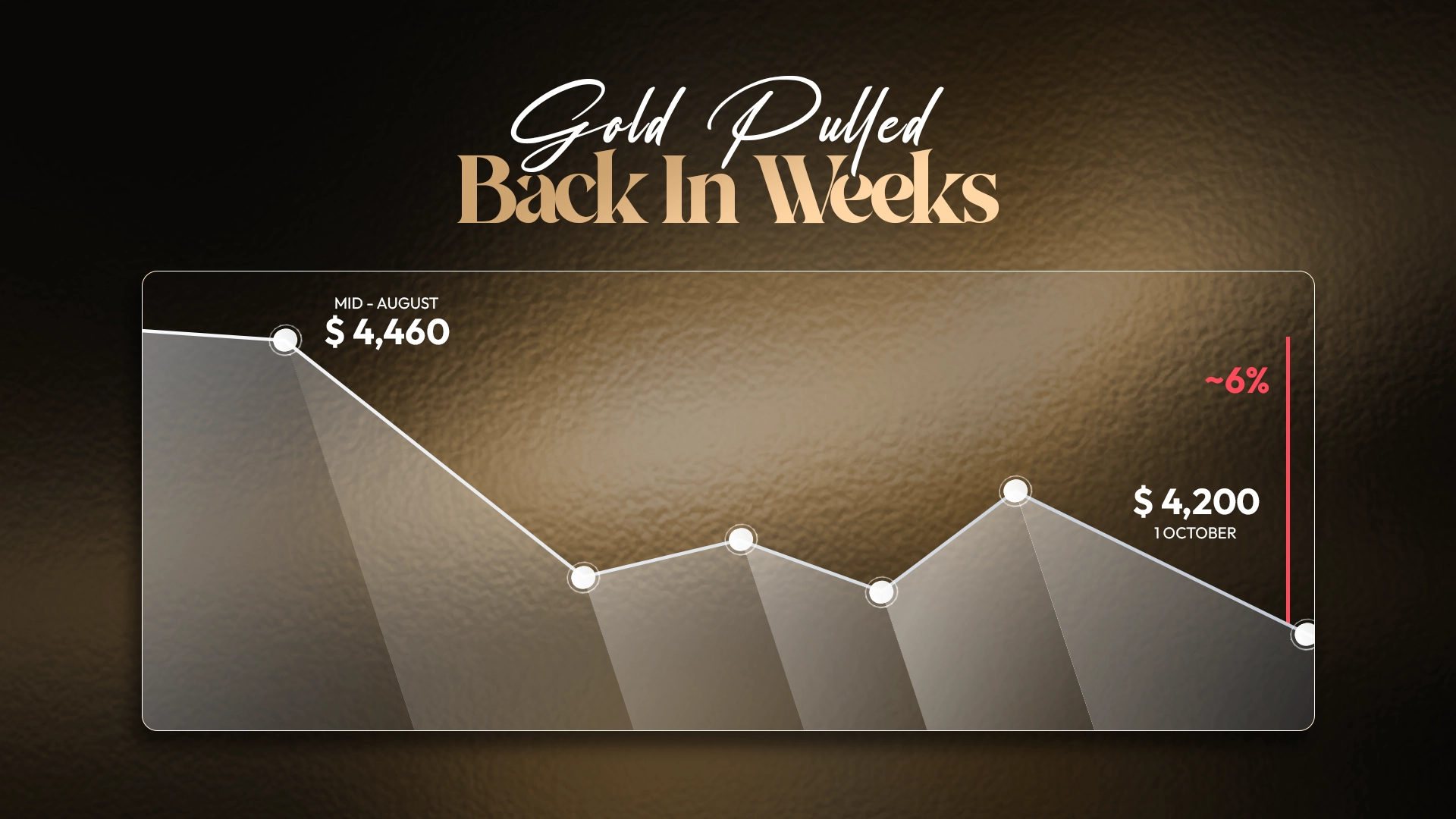
Context first, because "safe" means little without a price reference. Here is where things stood as this was published.
Spot gold around 1 October 2026, trading in a roughly $4,170 to $4,220 range that day
Level reached in mid-August 2026, so gold has pulled back around 6% from that high
Approximate drawdown from the August level in under two months, a live example of short-term volatility
That pullback is the point. Gold remains far above where it traded a year ago, yet it moved several percent lower in weeks. Anyone describing gold as "stable" is describing its long-run behaviour, not its month-to-month behaviour. Prices change daily, so check a live source before acting on any figure here.
What Does "Safe" Actually Mean for Gold?
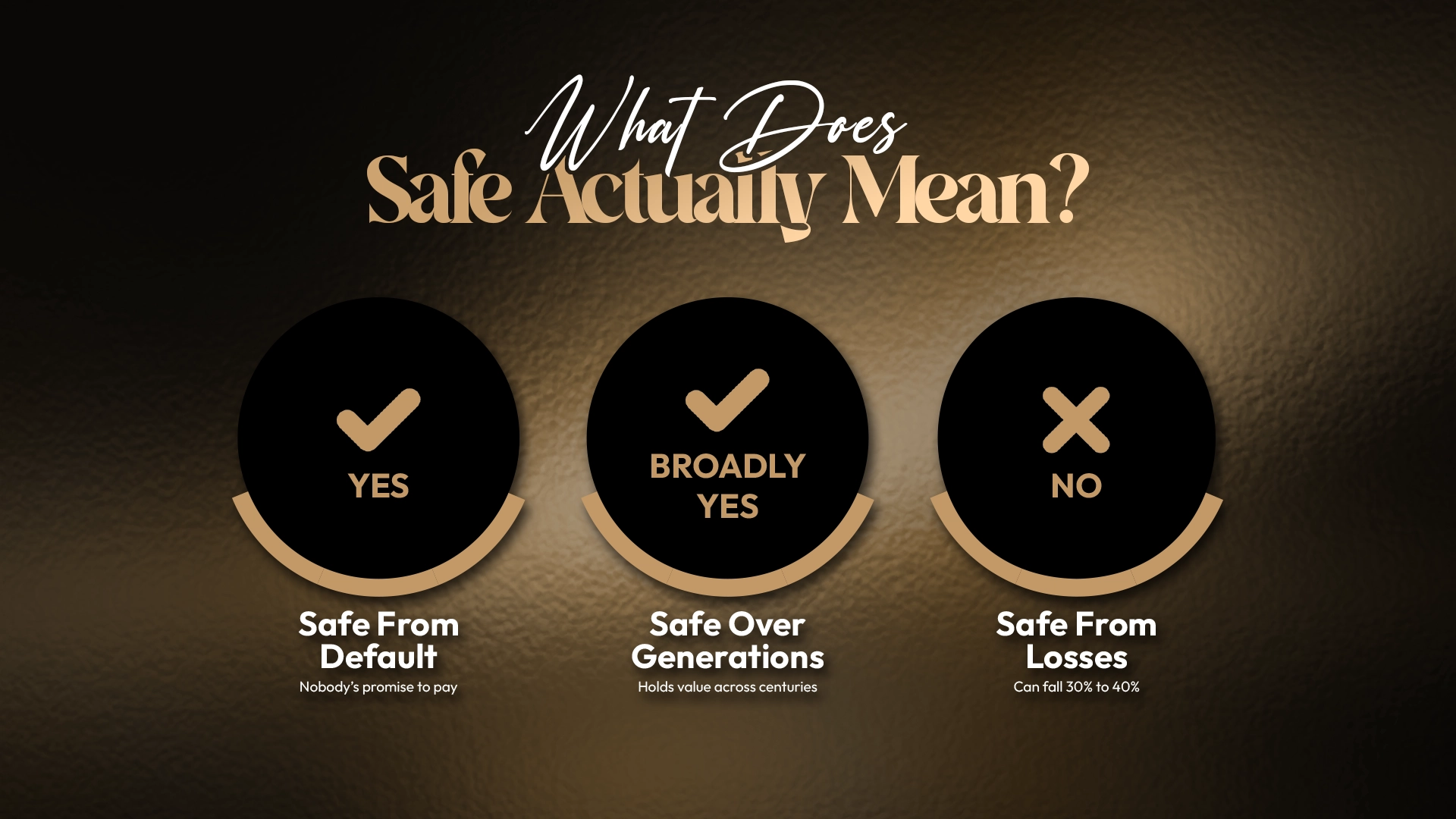
"Safe" is used in three different ways, and gold is only reliably safe in two of them.
Safe from default
Yes. Physical gold is nobody's promise to pay. There is no issuer, no coupon and no credit rating to fail.
Safe over generations
Broadly yes. Gold has preserved purchasing power across centuries and through repeated currency failures.
Safe from losses
No. Gold's price can fall 30 to 40% and stay depressed for years. It offers protection, not a guarantee.
This is why serious allocators call gold a hedge or a diversifier, not a safe deposit. Its job is to behave differently from the rest of your portfolio when stress arrives. It is not designed to rise every year.
Can Gold Lose Value?
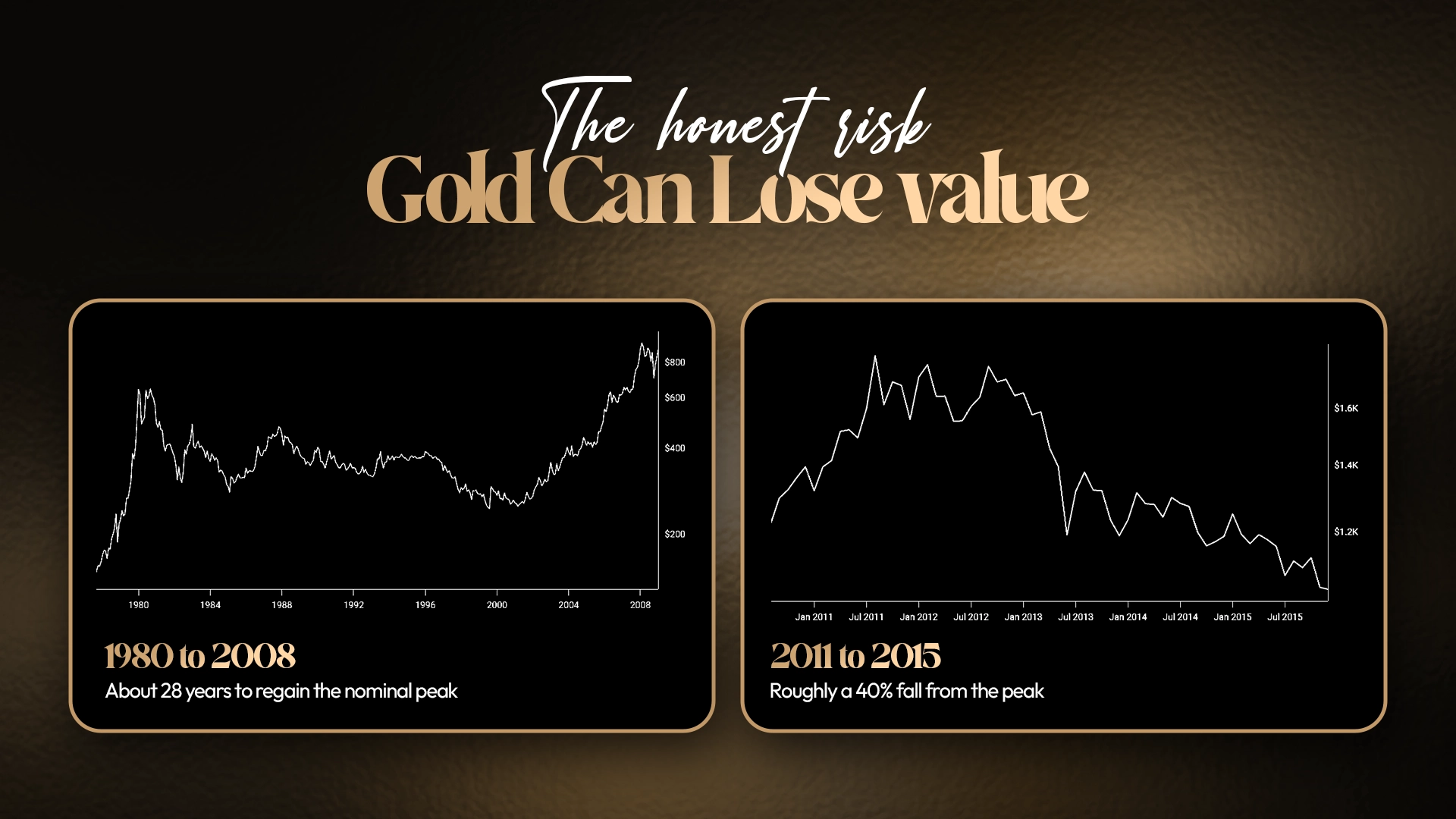
Yes, and the history is worth knowing before you allocate.
- 1980 to 2008. Gold peaked in January 1980 and did not regain that nominal level until 2008, a gap of roughly 28 years, and far longer once inflation is counted.
- 2011 to 2015. Gold fell roughly 40% from its 2011 peak to late 2015 as real interest rates rose and the US dollar strengthened.
- 2026. Gold has already pulled back around 6% from its August high, even in a year of strong demand.
Three forces drive these falls: rising real interest rates (which make a non-yielding asset less attractive), a stronger US dollar (since gold is priced in dollars), and fading safe-haven demand. If you cannot afford to wait out a multi-year drawdown, a large gold position is the wrong tool.
The honest risk: gold has no income. If you hold it for ten years and the price is flat, your return is zero while inflation and opportunity cost keep running. That is the real price of its protection.
Why Are Central Banks and HNWIs Still Buying Gold in 2026?
Because the case for gold in 2026 is about what it is not. It is not a government bond, not a bank deposit and not a currency, and that matters when all three face questions.
- Sustained central-bank buying. Official institutions have kept adding gold to reserves, partly to diversify away from dollar assets, which supports demand at the institutional level.
- Persistent inflation. With US inflation still elevated this year, investors are looking for assets whose value is not fixed in nominal terms. We cover that mechanism in our guide to safe asset-backed investments during inflation.
- Geopolitical risk. Energy-price shocks and regional conflict raise demand for assets with no counterparty.
- Portfolio construction. At large portfolio sizes, correlation matters more than headline return, and gold's low correlation to equities is the main reason it earns a place.
How Much Gold Should a High-Net-Worth Investor Hold?
There is no universal number. The right weight depends on your total wealth, how much you already hold in real assets such as property, your liquidity needs and your time horizon. Allocation frameworks discussed by wealth managers commonly range from low single digits to roughly 10 to 15 percent of a portfolio, with the higher end usually reserved for investors who explicitly want protection against currency debasement or geopolitical shocks.
A more useful test than a percentage is this: size gold so that a 30 to 40 percent fall would be uncomfortable but not damaging. If that drawdown would force you to sell something else at a bad time, the position is too large. Your adviser should set the final figure for your circumstances.
What Is the Safest Way to Hold Gold?
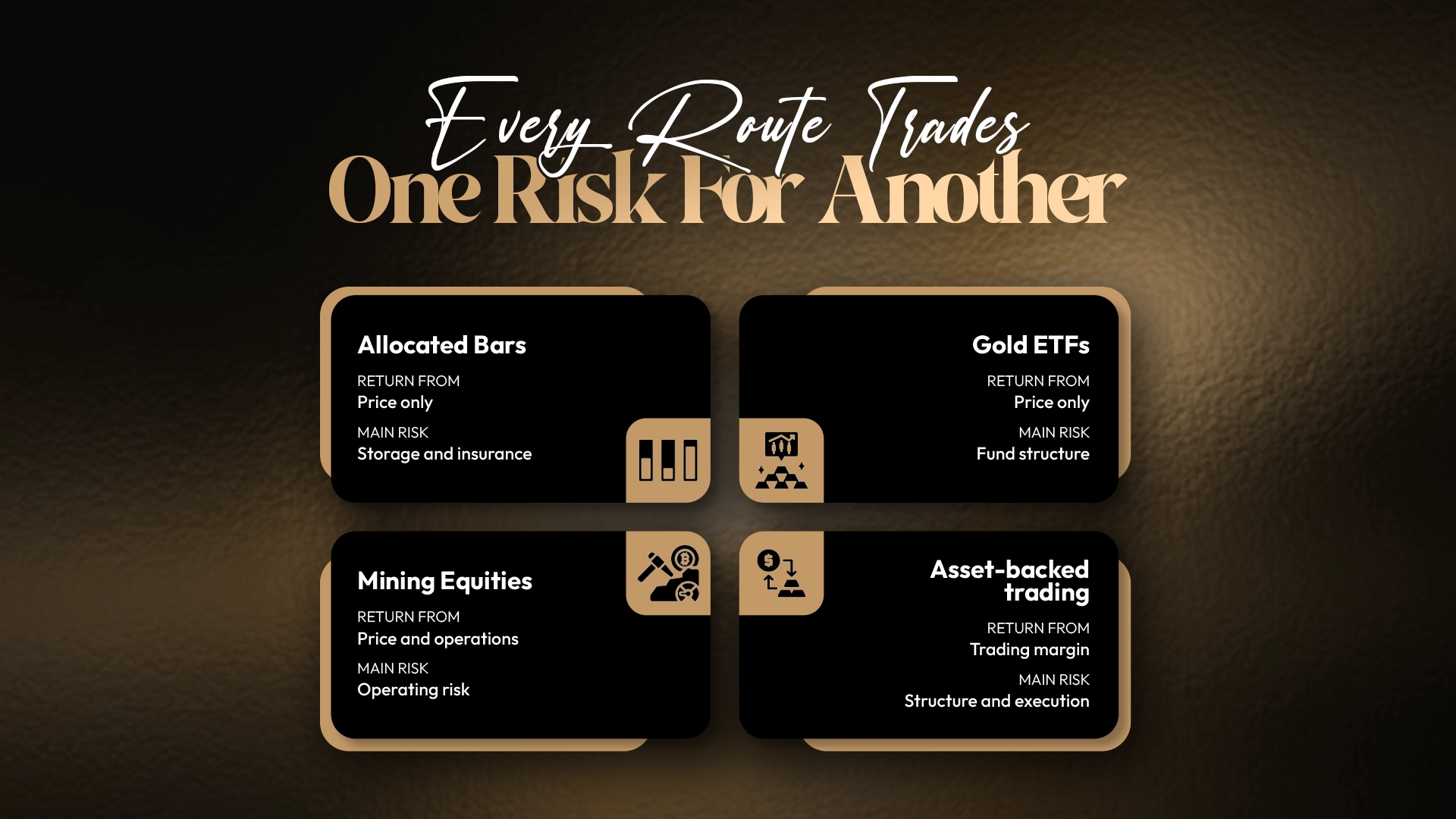
Each route trades one risk for another. "Safest" depends on which risk you are most worried about.
| Route | Return Source | Main Risk | Liquidity |
|---|---|---|---|
| Allocated physical bars | Price appreciation only | Storage, insurance, purity | Moderate |
| Gold ETFs | Price appreciation only | Fund structure, custodian | High |
| Gold mining equities | Price plus operating profit | Operating & market risk | High |
| Asset-backed gold trading | Trading margin | Structure & execution | Defined tenure |
For HNWIs, two details often get missed. First, "allocated" gold (specific bars held in your name) is very different from "unallocated" gold, which is a claim on a bank and reintroduces counterparty risk. Second, verifying custody, insurance and audit matters more as position size grows. Our guide to how asset-backed investment platforms work explains what to check.
What Risks Do HNWIs Often Overlook With Gold?
- Counterparty risk in "paper" gold. Unallocated accounts and some certificates are promises, not metal.
- Storage and insurance cost. Vaulting and insuring large holdings has an ongoing cost that quietly reduces return.
- Concentration. Gold in a single vault, jurisdiction or product concentrates risk that the metal itself does not carry.
- Dollar and real-rate sensitivity. A strengthening dollar or rising real yields can push gold down even when headlines look supportive.
- Liquidity at size. Selling large physical holdings quickly, at a fair price, is harder than selling a small one.
- Opportunity cost. Capital in gold earns nothing while it waits.
Owning Gold vs Asset-Backed Gold Trading: What Is the Difference?
Owning gold is a bet on the price. If gold rises, you gain. If it stays flat for a decade, you earn nothing. Asset-backed gold trading works differently: capital is deployed into the physical buying, assay, insured transport and sale of gold, and the return comes from the margin between the purchase and sale price.
That is how BricketX's gold trading vertical operates, through a sourcing and sale corridor between Kenya and Dubai. The mechanics are covered step by step in how BricketX deploys capital through the Kenya to Dubai gold corridor. Key features:
- Return from margin, not price direction. A trading spread can be earned whether the gold price is rising or flat, though a sharply falling price can still hurt execution.
- Ring-fenced SPV. Capital sits in a dedicated Special Purpose Vehicle, separate from the platform's balance sheet.
- 70/30 profit split, quarterly payouts on realised margin under a Shariah-compliant Mudarabah structure.
- Minimum $50,000 across all packages, with tenures from one to five years.
Not a substitute, a complement. Many HNWIs hold a core of allocated physical gold for pure price protection and add asset-backed gold trading for cash-flowing exposure. The two serve different jobs. Asset-backed returns are variable and not guaranteed, and capital is locked for the chosen tenure.
For diversification beyond gold, the same structure is applied to real estate development and other verticals, or you can spread capital across the multi-asset fund. Full protections are on Trust & Security.
How Should an HNWI Evaluate Gold Exposure?
- Define the job. Currency hedge, crisis stabiliser or source of return? Each points to a different holding method.
- Size to your drawdown tolerance. Pick a weight you can hold through a 30 to 40 percent fall.
- Choose the route and accept its risk. Compare physical, ETF, mining equities and asset-backed trading on counterparty, storage, liquidity and return source.
- Verify custody, audit and structure. Allocated and insured metal, independent audit, and a ring-fenced SPV for any platform.
- Stagger entry and review yearly. Build the position over time and rebalance when it drifts from target.
"Gold does not protect you by going up. It protects you by behaving differently when everything else is under stress."
-BricketX Editorial
Gold Exposure Without Price Speculation
BricketX deploys capital into the physical gold trade, so returns come from trading margin, not from guessing the gold price. Ring-fenced SPV, quarterly payouts, from $50,000.
Frequently Asked Questions
Is gold a safe investment in 2026?
Is gold safer than stocks or bonds?
Can gold lose value?
How much of a portfolio should high-net-worth investors hold in gold?
What is the safest way for a high-net-worth investor to hold gold?
What is the difference between owning gold and investing in asset-backed gold trading?
Disclaimer: This article is for informational and educational purposes only and does not constitute financial, legal or tax advice, an offer to sell, or a solicitation to buy any investment product. Gold price figures reflect publicly reported levels around 1 October 2026 and mid-August 2026, change constantly, and should be verified against a live source before any decision. Historical price behaviour does not guarantee future results, and gold can fall in value. Allocation ranges mentioned are general frameworks, not personal recommendations. BricketX asset-backed gold trading returns are variable, not guaranteed, and capital is subject to a defined tenure lock-in. Consult a qualified financial adviser before investing.
More from the BricketX Blog
Asset-Backed vs Stock Market: Which Investment Protects Capital Better?
A downturn is the only honest test of an investment. Here's a direct comparison of how asset-backed investments and the stock market each protect your capital, and where the real trade-offs lie.
Investing in Construction Projects Globally: A Guide for International Investors
You don't need a local company or a lawyer in three jurisdictions to put capital into a construction project abroad - but you do need to know exactly what stands between you and that project first.
Safe Asset-Backed Investments During Inflation: What Actually Works in 2026
Cash and bonds lose to inflation by design. Here's what the 2026 data actually shows works instead -real assets, asset-backed structures, and how to tell a genuine inflation hedge from one that only wears the label.